Home Pin 4: Pull the Pin
- 4.5
- Rating
- 10.00M
- Installs
- Free
- Price

 Analysis by App-foxy
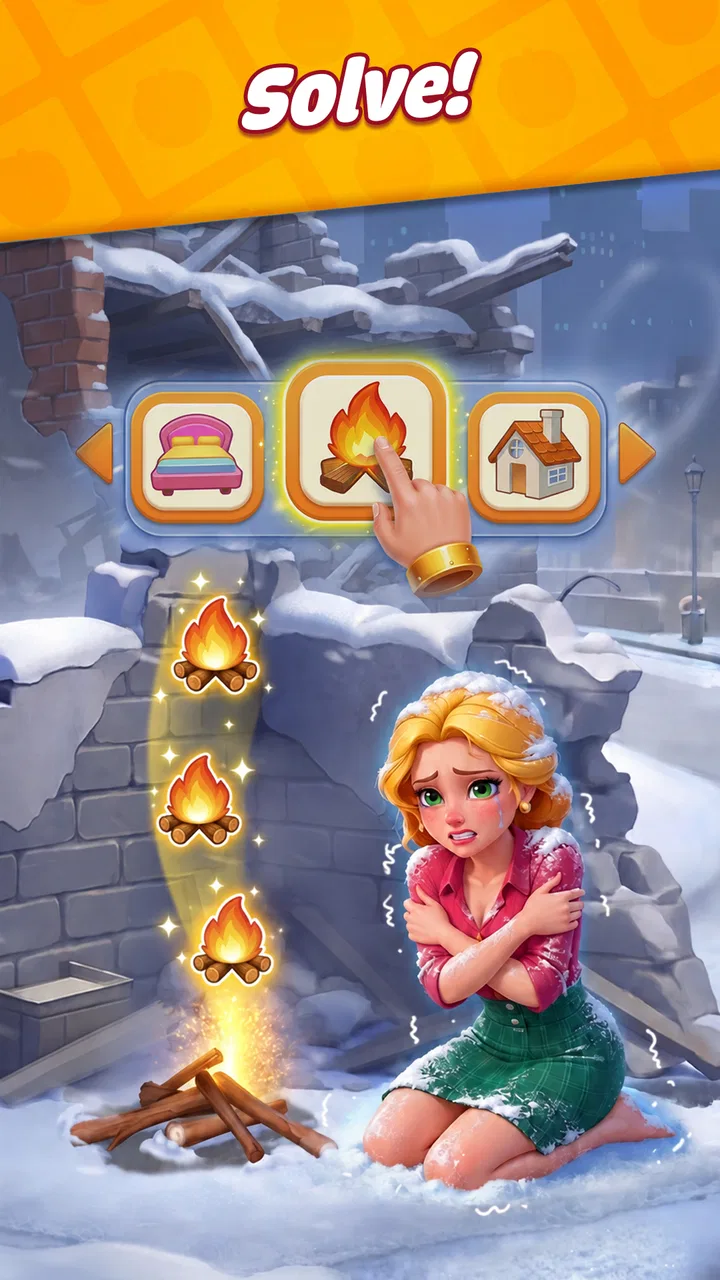
I went into Home Pin 4: Pull the Pin expecting a quick casual game, and that is exactly where its appeal starts. Each puzzle asks me to inspect a small scene, decide which pin to move, and watch the result unfold. The action is simple, but the order matters. A careless pull can ruin the solution, while a well-timed move can turn an apparently impossible situation into a neat little rescue.
That basic interaction gives the game a pleasant rhythm: look, predict, pull, react, and try again if the plan fails. It is not designed as a long strategic adventure or a demanding reflex challenge. Instead, it works best as a compact puzzle experience for short breaks, with a story layer that adds drama and humor around the pin-solving tasks.
How the pull-and-watch loop feels in practice
I focus on what makes each pull worth considering: not just whether it moves the scene forward, but what it reveals about the puzzle’s logic. When I’m unsure, I find it more useful to pause and predict the next visible consequence than to tap through several options; that keeps the humor and surprises intact while making each retry feel purposeful.
You May Also Like

 Blood Strike: 2.5 Anniversary
Blood Strike’s Loadouts Turn Every Drop Into a Tactical Gamble
A close look at Blood Strike’s custom loadouts: how fast access to signature weapons reshapes its battle royale rhythm, rewards preparation, and narrows the gap between fights.

 Pandora - Music & Podcasts
Pandora’s Music Is Easy to Start, but Harder to Recover
Pandora’s strength is its low-effort path from a seed to a station. Its weak spot is how much confidence it asks you to place in connection, setup, and quiet recovery.

 8 Ball Pool
 Is Built on Rivalries, Rematches, and Routine
A close look at the rivalries, rematches, shared routines, and unanswered safety questions that turn a quick pool match into a persistent mobile community.

 Samsung Music
’s Quiet Strength Is Playing What You Already Own
Its reach comes less from spectacle than from dependable access to a personal library. That simplicity is both the app’s strongest retention engine and its ceiling.

 AccuWeather: Weather Radar
AccuWeather Review: A Quick, Clear Forecast for Everyday Decisions
For everyday plans, the best forecast is the one you can understand quickly. AccuWeather makes rain timing, radar, and local conditions easy to act on, with a few trade-offs.

 Hill Climb Racing
Why Hill Climb Racing Still Turns Crashes Into One More Run
A tiny car, a bumpy hill and one more upgrade: Hill Climb Racing keeps resurfacing because its simple chaos makes every near-miss feel personal.
More From Our News Desk



The first action is more thoughtful than it looks
The first thing I learned was not to treat every visible pin as an invitation to pull it immediately. The scenes are arranged so that the important question is usually about sequence rather than speed. One pin may release a useful object, another may expose a hazard, and a third may change the path through the scene. The game encourages me to pause for a moment and read the whole setup before committing.
That makes the opening move satisfying when I get it right. I am not controlling a complicated character or learning a large set of commands. I am making one decision with limited information, then letting the puzzle show me whether my reasoning worked. The simplicity is friendly for new players, but the order-based design prevents the experience from feeling completely automatic.
For a realistic everyday use, I can see myself opening it while waiting for an appointment or taking a short break from work. I can solve a puzzle or two without needing to remember a large map, a collection of abilities, or a complicated objective. The game asks for attention, but not the kind of continuous concentration that makes a quick session exhausting.
Feedback makes every move easy to understand
The strongest part of the loop is the immediate feedback after a pull. The scene changes right away, so I can connect my decision with the result. If the move helps, the solution becomes clearer. If it causes trouble, I can usually understand what went wrong instead of feeling that the game failed me without explanation.
This matters because pin puzzles can become frustrating when the rules are hidden. Here, the visual arrangement does much of the teaching. Objects, obstacles, and characters suggest what might happen next, while the short sequence of actions keeps the cause and effect visible. I still need to think, but I am rarely buried under instructions.
The feedback also gives the game its comic timing. A successful move can feel like a small rescue, while a poor choice may produce an awkward or dramatic outcome. That mixture of tension and humor keeps the puzzles from becoming purely mechanical. I found myself paying attention not only to whether I had solved the level, but also to how the scene reacted to my decision.
Why another attempt usually feels worthwhile
When a plan fails, the reset is important. The game can return me to the puzzle so I can try a different order rather than forcing me to accept a bad result. That makes experimentation less intimidating. I can test an idea, observe the consequence, and use that information on the next attempt.
This is also where the game differs from a reflex-based casual title. There is no need to replay a long action sequence just because one decision was wrong. The central challenge is understanding the arrangement, not maintaining perfect timing for several minutes. For players who enjoy logic puzzles but do not want a punishing experience, that is a meaningful advantage.
There is still some friction. A puzzle can feel less rewarding when the intended solution becomes obvious after one failed pull, because the discovery is over quickly. The format also depends heavily on the quality of each individual scene. When the setup is clever, the short reset makes me want another try. When the setup feels too straightforward, the same reset can make the level feel disposable.
The story gives the small puzzles a reason to continue
The story is built around situations filled with drama and humor, and that framing helps the game avoid feeling like a collection of disconnected diagrams. I get a reason to care about the people and problems in front of me, even though the interaction remains focused on pins. The narrative does not replace the puzzle; it gives the puzzle a little more personality.
I would not choose this game for a deep, character-driven plot. Its story works in short portions, supporting the level rather than demanding long reading sessions. That is appropriate for the casual format. I can enjoy the setup, solve the immediate problem, and move on without needing to reserve a large block of time for the next chapter.
The balance between drama and humor is useful for pacing. Constant danger would make the game feel heavier than it needs to be, while nonstop jokes could weaken the sense that the solution matters. The lighter moments make a failed attempt easier to accept, and the dramatic situations give successful pulls a little more weight.
The reward is the solution itself
The most reliable reward is the moment when the correct order becomes clear and the scene resolves. I like that the satisfaction comes from understanding the puzzle rather than from mastering a large control system. The reward arrives quickly after the final correct action, so the connection between thought and outcome stays strong.
That design makes the game suitable for players who prefer visible progress. Each completed situation feels like a small finished task. It is a good fit for someone who wants a casual game that can provide a sense of completion in short bursts, rather than an endless activity with no clear stopping point.
The free entry point also helps with that style of play. The game is free, and optional in-app purchases are listed at between $1.99 and $3.99 per item. I would approach those purchases as convenience spending rather than as a reason to start playing. If I am comfortable thinking through a puzzle and retrying a failed move, I can enjoy the core loop without treating payment as part of the basic requirement.
That said, players who dislike any purchase prompts in free games should consider whether the format suits them. Even a well-designed puzzle can lose some of its charm if the player feels pushed toward spending whenever progress slows. My advice is to begin with the free experience, decide whether the puzzle rhythm works for you, and only then consider an optional purchase.
Resetting changes the emotional pressure
The reset is not just a practical function; it changes how I approach each level. Because a failed action can lead back to another attempt, I feel encouraged to reason experimentally. I can identify the dangerous pin, test the safer-looking option, and refine the order without turning one mistake into a major setback.
This is especially helpful for casual players who may not want a game that punishes them for trying. At the same time, the forgiving structure means the experience may not satisfy someone looking for severe consequences or a long-term competitive challenge. The tension comes from solving the sequence correctly, not from protecting a fragile run across many stages.
For the best results, I recommend using a simple routine: first identify the immediate danger, then look for the object or route that changes the scene, and only after that consider the final pull. I also try to separate pins that affect the environment from pins that directly affect the characters. This small habit prevents many impulsive mistakes and makes the visual logic easier to follow.
Another useful approach is to treat a failed attempt as information rather than as a loss. Notice which object moved, what became blocked, and whether the scene created a new hazard. The next solution often comes from that observation. This is one of the game’s less obvious strengths: the reset supports learning because the result is quick enough to remember.
Where it fits among casual puzzle alternatives
Compared with match-style casual games, this one gives me more deliberate decision-making and less emphasis on repeating a familiar pattern for a high score. Compared with physics puzzles, it offers a more controlled set of actions and a clearer focus on sequence. Compared with hidden-object games, it asks me to reason about consequences rather than simply locate items.
Those comparisons also show when another option might be better. If I want continuous action, fast reactions, or a score-chasing loop, a pin puzzle may feel too quiet. If I want a large world, character development, or a long campaign with complex systems, this is not the right category. Its strength is narrower: a self-contained problem, an immediate result, and a quick chance to try again.
The game is particularly well suited to people who enjoy “what happens if I do this first?” puzzles. It can also work for families because the content rating is Everyone and the controls are easy to explain. I would still expect younger players to need help with some of the sequencing, since simple controls do not always mean simple reasoning.
On the other hand, players who become irritated by trial and error may want a more transparent puzzle game with extensive explanations. The humor and story framing may also feel lightweight to anyone seeking a serious narrative. I found the tone pleasant, but I would not describe it as a substitute for a full adventure game.
Practical details before installing
Home Pin 4: Pull the Pin is a casual game from Gamee Global. It has a 4.5 average from around 38 thousand ratings, with over 5 million installs, which suggests that the short puzzle format has reached a broad audience. The game launched on January 15, 2025, and the current version is 1.2.7.
On the device side, it supports Android 7.0 and later. That gives it a useful reach for people who are not using a recent phone, although the actual comfort of play will still depend on screen size and general device performance. The scenes rely on seeing relationships between objects, so a very small display may make careful inspection less comfortable than it is on a larger phone.
The game is free to start, with optional purchases priced at $1.99 to $3.99 per item. Its Everyone age rating makes it easy to consider for a wide audience, but the purchase model is still worth remembering if the device is shared with children. I would check the purchase settings on a shared phone before handing it over, not because the game is difficult to use, but because casual games are often opened spontaneously.
One practical advantage is that the short action cycle makes it easy to stop after a solved scene. I do not have to commit to a long match or wait for a complicated round to end. That makes it a better fit for small gaps in the day than for a planned evening of deep gaming.
What keeps the loop from becoming repetitive
The action-feedback-reward-reset pattern is clear from the beginning, so the game’s long-term appeal depends on how much variety the situations provide. The story helps by changing the emotional context, while the pin order gives each scene its immediate problem. Still, the basic interaction remains the same throughout: inspect, pull, observe, and repeat.
I see that as both the identity and the limitation of the game. The consistency makes it accessible, but it also means players who need constantly changing mechanics may lose interest. I prefer to play it in short sessions rather than trying to stretch it into a marathon. That keeps the small victories fresh and prevents the repeated structure from feeling like work.
A useful personal rule is to stop after I notice that I am pulling pins without thinking. The game is most enjoyable when I am making a prediction, not simply tapping through the scene. Taking a break and returning later can restore the sense of discovery, especially because the puzzles are designed around compact visual decisions.
My verdict on the complete action cycle
Home Pin 4: Pull the Pin succeeds because every part of its loop has a clear job. The first action asks me to make a choice, the feedback shows the consequence, the reward confirms a successful solution, and the reset turns mistakes into another opportunity. The story adds enough drama and humor to make the scenes feel more inviting without overwhelming the puzzle itself.
I recommend it to anyone who wants a free casual game for short, thoughtful breaks, especially if you enjoy sequence puzzles and immediate cause-and-effect. It is also a sensible choice for players who prefer forgiving retries over demanding reflex challenges. The free format and Everyone rating make it easy to try, while the optional purchases are something to approach deliberately rather than automatically.
I would skip it if you need deep strategy, competitive scoring, rapid action, or a substantial narrative campaign. Its design is intentionally compact, and the repeated pin-pulling structure will not suit every mood. For me, though, that focus is the reason it works: I can open it, solve a small problem, watch the scene resolve, and decide whether I want one more attempt. That clean loop is the game’s real reward, and it is enough to make this a pleasant addition to a casual puzzle rotation.
FAQs for Home Pin 4: Pull the Pin
01What is Home Pin 4: Pull the Pin about?
Home Pin 4: Pull the Pin is a puzzle game that challenges players to solve intricate logic puzzles by pulling pins in the correct order. The goal is to guide a family safely through various obstacles and traps, using strategy and foresight. The game combines elements of puzzle-solving and strategy, offering hours of engaging gameplay.
02Is Home Pin 4: Pull the Pin free to play?
Yes, Home Pin 4: Pull the Pin is free to download and play. However, it includes in-app purchases that allow players to buy hints, remove ads, or access additional content. These purchases are optional, and players can enjoy the full game experience without spending any money.
03What are the key features of Home Pin 4: Pull the Pin?
Home Pin 4: Pull the Pin features hundreds of challenging levels, each with unique puzzles to solve. It offers a simple yet addictive gameplay mechanic, colorful graphics, and regular updates with new levels. The game also includes a hint system to help players who might get stuck on particularly challenging puzzles.
04Can I play Home Pin 4: Pull the Pin offline?
Yes, Home Pin 4: Pull the Pin can be played offline, making it a great option for those who want to enjoy the game without needing a constant internet connection. However, some features, like updates or in-app purchases, do require an internet connection.
05Is Home Pin 4: Pull the Pin suitable for all ages?
Home Pin 4: Pull the Pin is designed to be family-friendly and suitable for players of all ages. It features intuitive controls and simple mechanics that make it accessible to both younger players and adults. Parents can feel comfortable allowing their children to play this game.
Pros
- Engaging puzzle mechanics.
- Simple controls for all ages.
- Colorful and vibrant graphics.
- Challenging levels keep interest.
- Regular updates with new content.
Cons
- Ads can be intrusive.
- Limited hints available.
- Some levels feel repetitive.
- Requires internet for features.
- Occasional lag on older devices.

Home Pin 4: Pull the Pin
Gallery